Brand name normalization rules are used to keep brand names consistent across different systems and platforms. Many businesses face problems when the same brand appears in different formats, such as spelling changes, extra spaces, or added words.
People search for this topic to fix data issues, improve search results, and avoid duplicate records. In this article, you will learn what brand name normalization rules are, why they matter, and how they help keep data clean and reliable.
What Is Brand Name Normalization?
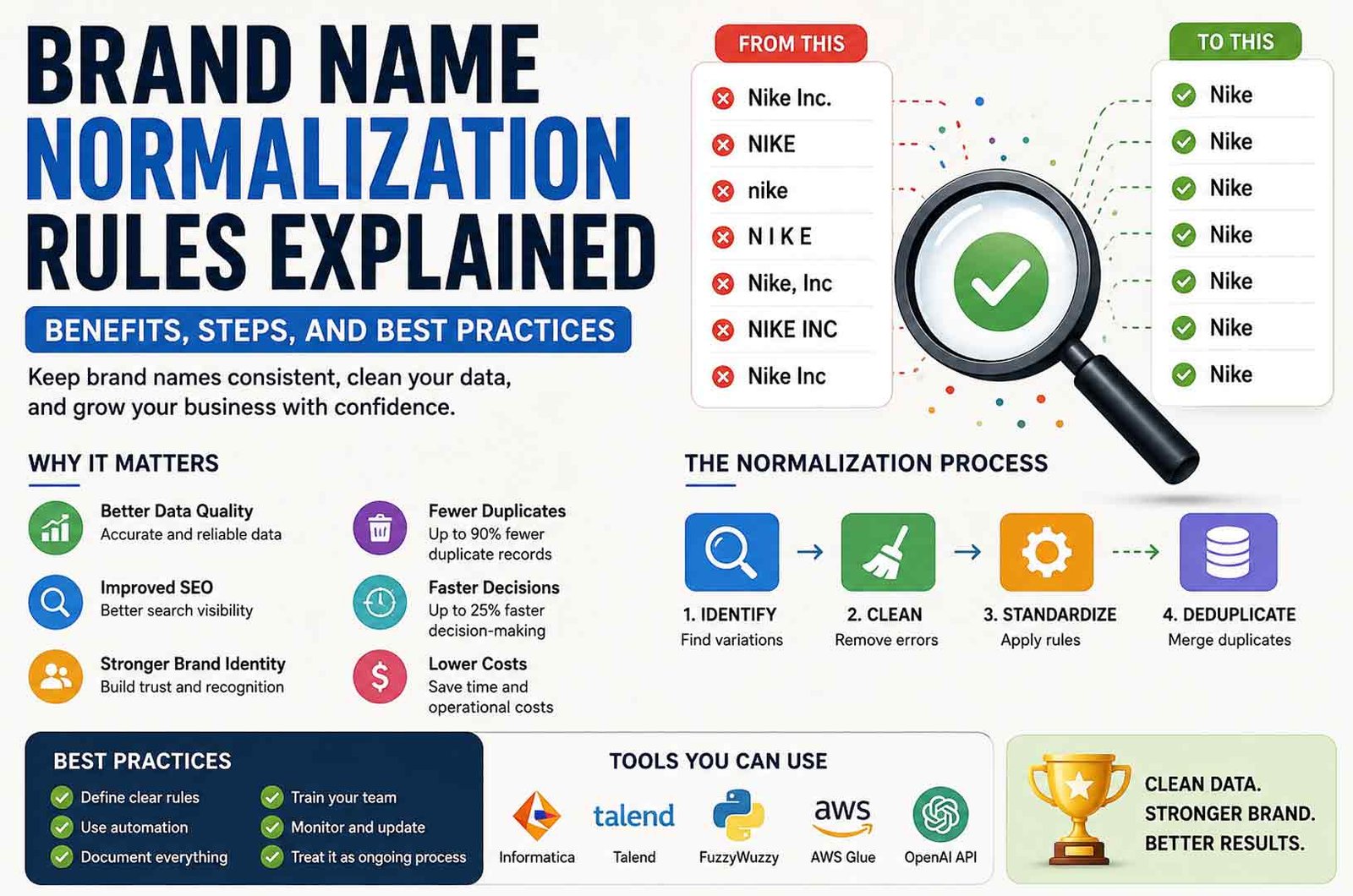
Brand name normalization is the process of converting different versions of a brand name into one standard format. This helps ensure that all systems use the same name for the same brand.
For example, a brand like Nike may appear as “nike,” “NIKE,” or “Nike Inc.” in different records. Normalization changes all of these into one approved version, such as “Nike.”
This process is important for keeping data organized. It is widely used in CRM systems, product catalogs, analytics tools, and search systems.
It also helps separate brand names from business or legal names. A company may have a legal name with extra words, but the brand name used in marketing is often shorter and simpler. Normalization focuses on keeping the brand name consistent while respecting legal differences when needed.
Why Brand Name Normalization Is Important
Brand name normalization rules help businesses manage data more effectively. Without them, small differences in brand names can create large problems in systems and reports.
First, normalization keeps data clean. When all brand names follow the same format, it becomes easier to organize and understand data.
It also improves search results. Consistent naming helps systems and search engines find the correct brand without confusion.
Another key benefit is reducing duplicates. When the same brand appears in many forms, systems may treat them as separate entries. Normalization merges these into one record.
It also supports accurate reporting. Clean data leads to better analysis and faster decision-making.
From a branding point of view, consistency builds trust. When customers see the same name everywhere, it feels more reliable and professional.
In addition, teams work better together. Marketing, sales, and data teams can use the same approved name in all systems and campaigns.
Common Challenges in Brand Name Normalization
Brand name normalization is useful, but it is not always simple. Many common issues make the process harder.
One major challenge is variation in spelling and formatting. A brand name may appear with different punctuation or spacing. For example, “H&M,” “H & M,” and “h m” may all refer to the same brand.
Capitalization is another issue. Systems may treat “apple,” “Apple,” and “APPLE” as different entries if not normalized.
Legal suffixes also create confusion. Words like “Inc,” “Ltd,” or “LLC” are sometimes included and sometimes removed.
Changes over time add more complexity. Brands may merge, rebrand, or use different names in different markets.
Regional differences also matter. A brand name may be spelled differently in different countries or languages.
Finally, user input errors are very common. People often type brand names incorrectly, which leads to duplicates and mismatched records.
Core Brand Name Normalization Rules
Brand name normalization rules provide a clear way to standardize data. These rules help ensure consistency across all systems.
The first rule is to define a standard format. Choose one official version of the brand name and use it everywhere.
The second rule is consistent capitalization. Decide how the name should appear and apply it uniformly.
Another important rule is removing unnecessary legal suffixes. Terms like “Inc” or “Ltd” are often not needed for brand identification.
Cleaning punctuation is also important. Extra symbols should be removed unless they are part of the official name.
Spacing should be normalized as well. Remove extra spaces and keep formatting clean.
Handling abbreviations is another key step. Decide whether to expand or keep short forms and apply that decision consistently.
A lookup table is often used to manage known variations. This helps map different versions to the correct standard name.
Finally, all rules should be documented and followed by all teams. This ensures consistency across systems and over time.
How Brand Name Normalization Works (Step-by-Step)
Brand name normalization follows a structured process.
The first step is identifying variations. This involves finding all the different ways a brand name appears in the data.
Next is cleaning. Remove extra spaces, incorrect punctuation, and obvious errors.
After that, apply standardization. Convert each variation into the approved format based on defined rules.
The next step is deduplication. Merge duplicate records so that each brand appears only once.
Then, validate the results. Check a sample of data to ensure the rules are working correctly.
Once validated, apply the process across all systems. This ensures consistency in all areas where the data is used.
Finally, monitor the data regularly. New entries may introduce new variations, so normalization must continue over time.Best Practices for Effective Normalization
Brand name normalization rules work best when they are applied consistently and maintained over time.
Start by documenting all rules clearly. Every team should follow the same naming standards. This avoids confusion and keeps data consistent.
Normalization should not be treated as a one-time task. New data is added daily, so rules must be applied continuously.
Automation is important for large datasets. It reduces manual work and improves accuracy. However, manual review is still useful for special cases.
Training teams also helps. When people understand the rules, they are less likely to create inconsistent data.
Regular audits are necessary. They help identify new variations and keep the system clean.
Tracking performance is also useful. Metrics such as duplicate reduction or data accuracy show whether the process is working.
Tools and Technologies for Brand Name Normalization
Different tools are used depending on data size and complexity.
Enterprise data management tools are used by large organizations. These tools help manage and standardize data across multiple systems.
Developer tools, such as Python libraries, are useful for custom solutions. They help match similar names and clean data quickly.
Cloud ETL platforms are used to process large amounts of data. They apply normalization rules automatically in data pipelines.
AI and NLP tools can understand context. They help identify similar brand names even when the differences are complex.
Choosing the right tool depends on:
Small datasets can be handled manually or with simple tools. Large systems usually require automation and integration with data pipelines.
Common Mistakes to Avoid
Brand name normalization rules can fail if common mistakes are not avoided.
One common mistake is not having clear rules. Without documentation, different teams may follow different formats.
Another mistake is treating normalization as a one-time task. This leads to new inconsistencies over time.
Some systems remove too much information. This can damage brand identity, especially for names that depend on symbols or formatting.
Mixing brand names with legal names also causes confusion. These should be handled separately when needed.
Relying only on manual work is slow and not reliable for large datasets. Automation is necessary for better results.
Delaying deduplication can also create problems. Duplicate records should be handled during the normalization process.
Finally, ignoring performance tracking makes it hard to improve. Without data, it is difficult to know if the process is effective.
Real-World Examples of Brand Normalization
Many companies use brand name normalization rules to improve their operations.
A healthcare company standardized thousands of employee email signatures after a merger. This helped create a consistent brand image and improved communication.
A retail company improved its product data by fixing inconsistent brand names across platforms. This led to better data accuracy and improved marketing results.
An e-commerce company corrected incorrect product listings caused by automated matching errors. This helped restore customer trust and improved product visibility.
These examples show that normalization is useful in different industries. It supports both internal operations and customer-facing systems.
Benefits and Limitations
Benefits
-
Improves data accuracy and consistency
-
Reduces duplicate records
-
Makes reporting and analysis easier
-
Strengthens brand identity
-
Improves search performance and SEO
Limitations
-
Requires continuous effort
-
Can be complex for large datasets
-
Needs proper tools and planning
-
Risk of losing useful context if rules are too strict
Tips for Better Brand Name Normalization
-
Start with a small dataset to test rules
-
Define a clear standard name early
-
Use a lookup table for common variations
-
Automate repetitive tasks where possible
-
Keep rules simple and easy to follow
-
Review and update data regularly
These simple steps make brand name normalization rules easier to apply and maintain.
Bottom Line
Brand name normalization rules help keep data clean, consistent, and reliable. They reduce errors, improve search results, and support better decision-making.
The most effective approach combines clear rules, automation, and regular monitoring. When done correctly, normalization becomes a key part of data management and business growth.
(FAQs)
Why are brand name normalization rules important?
They improve data quality, reduce duplicates, and support accurate reporting.
How do brand name normalization rules work?
They identify variations, clean data, apply standard formats, and remove duplicates.
Can normalization handle regional differences?
Rules can include mappings for different languages and regional variations.
Does brand name normalization help SEO?
Consistent brand names improve search visibility and indexing.
What tools are used for normalization?
Tools include enterprise data platforms, ETL systems, developer libraries, and AI tools.
Is brand name normalization a one-time process?
It is an ongoing process that requires regular updates and monitoring.
Keep Reading:
DigitalConnectMag.com Overview: Technology Topics, Uses, and Pros and Cons







 Life Style1 year ago