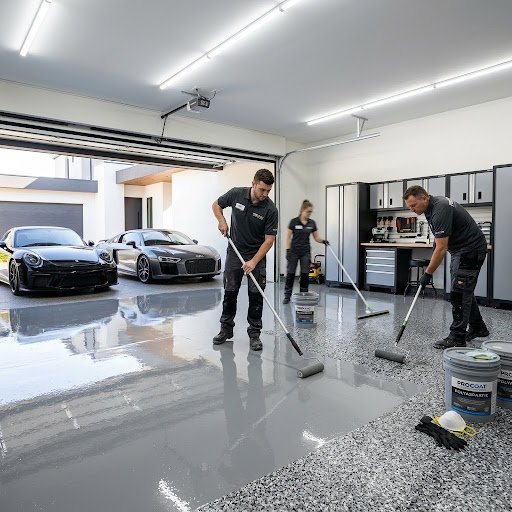
Your garage floor takes a beating every single day. Oil drips, tire marks, heavy foot traffic, dropped tools—it handles all of it without complaint. But at some point, bare concrete stops being “good enough.” It starts cracking, staining, and looking worn out. That’s where the right coating changes everything.
Carbon Concrete Coatings specializes in transforming dull, damaged garage floors into surfaces that are as tough as they are eye-catching. And the coating at the center of that transformation? Polyaspartic.
Why Polyaspartic Outperforms Traditional Garage Floor Coatings
Not all garage floor coatings are created equal. Epoxy has been around for decades and still has its fans, but polyaspartic technology has moved the benchmark significantly.
Polyaspartic coatings cure fast—sometimes within hours—which means minimal disruption to your schedule. They’re also UV-stable, so the surface won’t yellow or fade after years of sun exposure. Epoxy, by contrast, tends to yellow over time when exposed to UV light, which is a real problem for garages with natural light.
The performance difference goes beyond appearance. Polyaspartic coatings offer:
- Superior abrasion resistance, holding up against heavy vehicle traffic and equipment
- Chemical resistance that withstands spills from oil, gasoline, and cleaning solvents
- Flexibility, reducing the risk of cracking as the concrete beneath expands and contracts with temperature changes
- Temperature tolerance, allowing application in both hot and cold conditions where epoxy would fail
For homeowners who want a long-term solution rather than a short-term fix, polyaspartic is the clear frontrunner.
What the Installation Process Actually Looks Like
One of the most common questions homeowners ask is: “How long will this take?” The answer depends on the size and condition of your garage floor, but polyaspartic coatings dramatically reduce project timelines compared to traditional options.
Here’s what the Carbon Concrete Coatings installation process typically involves:
Surface Preparation: This is the most important step. The concrete is ground down using diamond grinding equipment to open up the pores, remove any existing coatings or sealers, and create a strong mechanical bond.
Crack and Joint Repair: Any visible cracks or damaged areas are filled and repaired before coating begins.
Base Coat Application: The polyaspartic base coat is applied evenly across the surface, forming the foundation of the system.
Decorative Flake Layer: Color flakes are broadcast into the wet base coat. This adds texture, visual depth, and slip resistance—all at once.
Topcoat Sealing: A final clear topcoat locks everything in, adding gloss and a protective layer that stands up to daily wear.
In many cases, the entire process can be completed in a single day, with the floor ready for light foot traffic within hours and full vehicle use within 24 hours.
How Does a Polyaspartic Coating Change the Way Your Garage Feels?
The functional upgrades are obvious. But there’s something worth mentioning about how a freshly coated garage floor changes the feel of the entire space.
A polished, flake-finished floor reflects light differently. The garage feels cleaner, brighter, and more organized—even before you’ve touched a single shelf or storage cabinet. It’s the kind of upgrade that makes you actually want to spend time in the space.
That’s not a small thing. Garages that feel unpleasant to be in become cluttered and neglected. Garages with a clean, finished floor tend to stay that way. The coating doesn’t just protect the concrete—it changes how you relate to the room.
Choosing the Right Finish, Color, and Texture for Your Garage
Carbon Concrete Coatings offers a range of customization options, so your floor can reflect your personal style as much as your practical needs.
Flake size and density: Fine flakes create a more subtle, refined look. Larger flakes deliver bold visual texture. Full-broadcast systems, where flakes are applied edge to edge, create a seamless finish that hides imperfections beautifully.
Color combinations: From neutral grays and tans to bold metallics and custom blends, there’s no shortage of options. The color you choose affects not just aesthetics but also how visible dirt and debris are between cleanings.
Gloss level: High-gloss finishes look striking and reflect light well. Satin finishes are easier to maintain in high-traffic areas and show fewer scuffs.
The Carbon Concrete Coatings team works with homeowners to find the right combination—one that looks great on day one and continues to perform years down the line.
Why Carbon Concrete Coatings Is the Right Team for This Job
Polyaspartic garage floor coating that seals, protects, and elevates your concrete floor against everything from chemical spills to daily vehicle traffic is one of the highest-value upgrades you can make to your home’s most-used utility space. But only when it’s installed correctly.
That’s the part that matters most. Polyaspartic coatings require precise surface preparation, proper mixing ratios, and controlled application conditions. Shortcuts at any stage compromise the bond, the finish, and the lifespan of the coating.
Carbon Concrete Coatings brings professional-grade equipment, trained installers, and a commitment to doing the job right—every time. The result is a floor that holds up under pressure, looks sharp, and requires almost no maintenance beyond the occasional sweep and mop.
Your Garage Floor Has More Potential Than You Think
Most homeowners underestimate what their garage could be. A cracked, stained concrete slab feels like a permanent condition. It isn’t. With the right coating system installed by professionals who know what they’re doing, the floor you’ve been tolerating becomes a surface you’re proud of.
Carbon Concrete Coatings is ready to make that happen. Reach out today to get a quote and find out how quickly your garage floor can go from forgotten to finished.