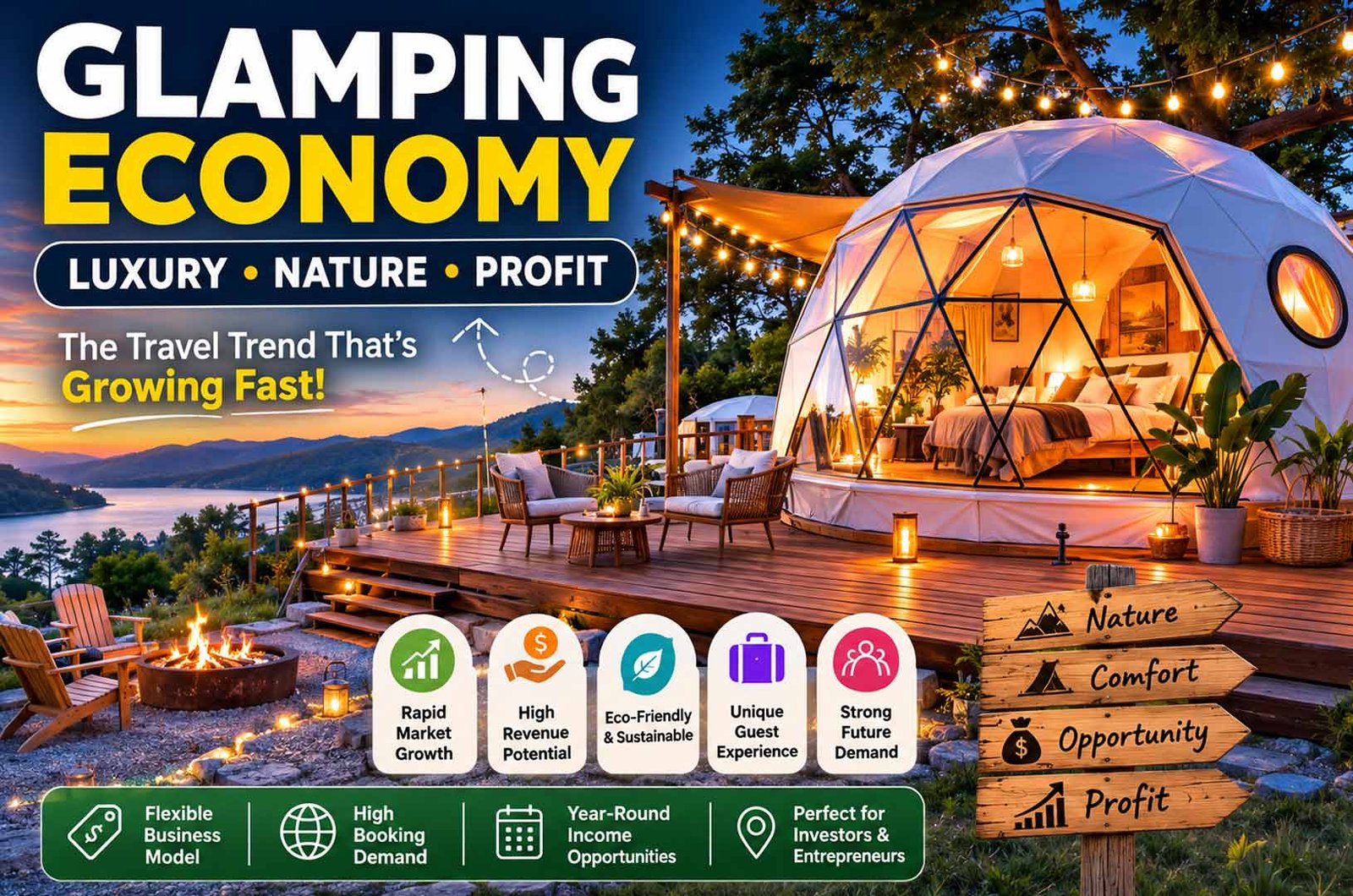
The glamping economy is a fast-growing part of the travel and tourism industry. It combines outdoor stays with modern comfort. Many people search for this topic to understand how it works, why it is popular, and whether it is a good business opportunity.
In this article, you will learn what the glamping economy is, how it works, its market growth, and the main reasons behind its rise.
What Is the Glamping Economy?
The glamping economy refers to all business activity connected to luxury outdoor stays. It includes not only glamping sites but also the companies and services that support them.
Glamping itself means “glamorous camping.” It offers the experience of nature without the discomfort of traditional camping. Guests stay in ready-made units with proper beds, electricity, and often private bathrooms.
The glamping economy includes:
-
Accommodation providers (sites and resorts)
-
Landowners and investors
-
Construction and unit manufacturers
-
Booking platforms and travel services
-
Food, activity, and local service providers
This makes it a full ecosystem within the tourism and hospitality sector.
Glamping vs Traditional Camping
Traditional camping usually involves basic tents, shared facilities, and self-preparation. Glamping focuses on comfort, privacy, and convenience.
For example:
-
Camping: set up your own tent, limited facilities
-
Glamping: ready-to-use unit with furniture, utilities, and services
This difference is one of the main reasons for its growing demand.
How the Glamping Economy Works
The glamping economy works through a simple but structured model. It combines real estate, hospitality, and tourism services.
Basic Process
-
Land is purchased or leased
-
The site is prepared with utilities and access
-
Accommodation units are installed
-
The property is listed on booking platforms or its own website
-
Guests book and stay
-
The operator earns revenue from stays and services
Role of Different Participants
-
Operators manage the site, guests, and services
-
Investors fund the land and development
-
Service providers offer food, activities, and maintenance
-
Booking platforms connect guests with properties
Booking and Guest Experience
Most bookings happen online through:
-
Travel websites
-
Direct booking websites
-
Mobile devices
Guests can compare locations, check reviews, and book easily. After booking, they arrive at a fully prepared space without needing camping skills or equipment.
Importance of Location and Design
Location plays a key role in success. Popular choices include:
-
Mountains
-
Forests
-
Lakesides
-
Farms
-
Coastal areas
Design also matters. Unique and visually attractive units often perform better, especially on social media.
How Glamping Has Evolved Over Time
Glamping started as a small niche linked to luxury safari camps and eco-lodges. These early setups focused on comfort in natural environments.
Over time, the concept expanded. New types of structures were introduced, such as domes, cabins, pods, and treehouses. This made glamping more flexible and easier to scale.
A major change came with online booking platforms. Small operators could now reach global customers without large marketing budgets. Social media also played a big role by promoting visually unique stays.
Travel behavior has also changed. Many people now prefer experiences over standard hotel stays. Glamping fits this shift by offering nature, comfort, and memorable stays in one place.
Market Size and Growth of the Glamping Economy
The glamping economy has grown steadily over the past few years. It is now considered a multi-billion-dollar global industry.
Reported estimates suggest:
-
Around $3.4 billion in 2024
-
Around $3.7 billion to $4.2 billion in 2025–2026
-
Expected to reach about $7 billion or more by 2031–2032
Most sources also report an annual growth rate of about 9% to 10%.
Regional Growth
-
Europe is the largest market due to strong tourism infrastructure
-
North America is growing quickly with high domestic travel demand
-
Asia-Pacific is expanding due to rising middle-class travel
-
Other regions are also developing eco-tourism opportunities
Important Note
Different reports give slightly different forecasts. For example, some predict growth by 2031, while others extend to 2032. These numbers should be treated as industry estimates, not exact figures.
Key Drivers Behind the Growth
Several factors are pushing the growth of the glamping economy.
Demand for Comfortable Outdoor Travel
Many people want to enjoy nature without dealing with the difficulty of camping. Glamping removes barriers like setting up tents and using basic facilities.
Rise of Eco-Tourism
Travelers are more aware of environmental impact. Glamping sites often use:
-
Renewable energy
-
Water-saving systems
-
Low-impact construction
This attracts eco-conscious visitors.
Experience-Based Travel
Modern travelers value unique experiences. Glamping offers activities like:
-
Stargazing
-
Outdoor dining
-
Nature walks
-
Wellness sessions
These experiences make trips more memorable.
Growth of Remote Work
Remote work allows people to travel while working. Glamping sites with Wi-Fi and peaceful settings attract digital workers and long-stay guests.
Influence of Social Media
Unique stays are often shared online. Eye-catching designs like domes and treehouses attract attention and bookings.
Younger Travelers
Millennials and Gen Z are strong contributors to demand. Some reports suggest they account for a large share of bookings, although exact percentages vary by source.
Types of Glamping Accommodation
Glamping offers many types of accommodation. Each type has different costs, setup time, and comfort levels.
Common Types
-
Safari tents – Large tents with beds and furniture
-
Geodesic domes – Modern round structures with strong insulation
-
Cabins and pods – Small houses with full facilities
-
Treehouses – Elevated units with unique views
-
Tiny homes – Compact houses with complete setups
-
Vintage trailers – Renovated vehicles with modern interiors
-
Floating cabins – Units built on water
Some units offer basic comfort, while others include luxury features like private bathrooms, heating, air conditioning, and hot tubs.
The choice of unit affects both the guest experience and the total investment.Startup Costs and Investment Breakdown
Starting a business in the glamping economy requires a significant upfront investment. The total cost depends on location, size, and level of comfort offered.
Most estimates suggest a starting range of about $225,000 to over $1 million. A mid-range project with a few units may cost around $350,000 to $550,000.
Main Cost Areas
-
Land: Buying or leasing land can cost from $50,000 to $500,000 or more, depending on location.
-
Site preparation: Includes leveling, drainage, roads, and landscaping.
-
Utilities: Water, electricity, and waste systems are often expensive to install.
-
Accommodation units: Tents, domes, cabins, or other structures form a large part of the budget.
-
Furnishings: Beds, furniture, and guest amenities.
-
Technology and marketing: Website, booking system, and promotion.
-
Permits and legal costs: Required before opening.
Hidden costs may include maintenance, insurance, and unexpected site work. These are often underestimated in early planning.
Permits, Regulations, and Legal Requirements
The glamping economy is regulated at the local level. Rules depend on the country, region, and type of property.
Most projects require:
Some locations also regulate short-term rentals and tourism operations.
Permits can take time. Delays are common if approvals are not secured early. Costs may range from a few thousand dollars to much higher, depending on complexity.
There is no single global law for glamping. Each project must follow local rules.
Revenue Streams in the Glamping Economy
Glamping businesses usually earn money from more than one source. This helps reduce risk and increase total income.
Main Revenue
The primary income comes from nightly stays. Prices vary widely but are often higher than traditional camping.
Additional Revenue
Many operators add extra services, such as:
-
Food and drink
-
Guided outdoor activities
-
Wellness services like yoga or spa sessions
-
Equipment rental
-
Event hosting, including small weddings and retreats
-
Local products and merchandise
These extra services can increase revenue per guest without large extra costs.
Pricing, Occupancy, and Profit Potential
Pricing in the glamping economy depends on location, quality, and season.
Typical nightly rates range from about $150 to $600 or more. Luxury properties may charge higher rates.
Occupancy and Performance
Higher occupancy and higher prices lead to better profits.
Costs and Profit
Operating costs usually take 40% to 60% of total revenue. These include staff, maintenance, utilities, and marketing.
Estimated profit margins:
-
Small sites: about 15% to 25%
-
Mid-size sites: about 20% to 30%
-
Larger sites: up to 35% or more
ROI Timeline
These are general estimates. Actual results depend on management, demand, and location.
Glamping vs Traditional Camping
Glamping and traditional camping serve different types of travelers.
Key Differences
-
Comfort: Glamping offers beds, bathrooms, and utilities. Camping is basic.
-
Cost: Glamping is more expensive per night.
-
Experience: Glamping focuses on comfort and design. Camping focuses on simplicity.
Business Comparison
Glamping usually earns more per unit and per guest. It can also achieve higher profit margins.
However, it also requires higher investment and higher service standards.
Traditional camping may cost less to start but usually generates lower revenue per guest.
Benefits of the Glamping Economy
For Travelers
-
Comfortable way to enjoy nature
-
No need for camping equipment
-
Private and unique stays
-
Access to activities and services
For Business Owners
Glamping also allows use of rural land that may not suit other businesses.
Challenges and Risks
The glamping economy also has challenges that should be understood.
-
High upfront investment
-
Seasonal demand in some locations
-
Weather impact on operations
-
Strict regulations and permits
-
High guest expectations
-
Ongoing maintenance costs
Failure to manage these risks can reduce profitability.
Safety, Privacy, and Environmental Impact
Safety is important in all glamping operations.
Safety
Operators must ensure:
Privacy
Guest data from bookings must be handled securely. This includes payment and personal information.
Environmental Impact
Many glamping sites focus on eco-friendly practices, such as:
-
Solar energy
-
Water conservation
-
Low-impact construction
These practices can reduce long-term costs and attract eco-conscious guests.
Technology and Booking Systems
Technology plays a key role in the glamping economy.
Most businesses use:
These tools help manage reservations, pricing, and guest communication.
Mobile devices are commonly used by guests to search and book stays.
New trends include contactless check-in and automated guest services.
Future Trends in the Glamping Economy
The glamping economy is expected to continue growing.
Key trends include:
-
Eco-luxury accommodation with sustainable design
-
Wellness tourism, including yoga and relaxation retreats
-
Remote work stays with Wi-Fi and quiet environments
-
Year-round operations using insulated structures
-
Tech-free experiences focused on relaxation
-
Pet-friendly properties attracting more guests
These trends show how the industry is adapting to changing travel preferences.
Who the Glamping Economy Is For
The glamping economy serves both travelers and business owners.
Suitable for Business
-
Investors looking for tourism opportunities
-
Landowners and farmers
-
Small hospitality businesses
-
Entrepreneurs entering eco-tourism
Suitable for Travelers
Bottom Line
The glamping economy combines outdoor travel with modern comfort. It has grown into a multi-billion-dollar industry with strong future potential.
It offers high revenue opportunities but also requires careful planning, investment, and management.
For travelers, it provides a simple way to enjoy nature. For investors, it offers a flexible business model with growing demand.
(FAQs)
How much does it cost to start a glamping business?
Costs usually range from about $225,000 to over $1 million, depending on size and location.
Why is glamping becoming so popular?
People want outdoor experiences with comfort, convenience, and unique stays.
Is glamping better than traditional camping?
It depends on preference. Glamping offers comfort, while camping offers a simpler and cheaper experience.
Do you need permits to start a glamping site?
Most locations require zoning approval, safety checks, and business licenses.
What are the main risks in the glamping business?
High costs, seasonality, weather, and regulatory challenges.
Keep Reading:
FintechZoom.com Review: Features, Safety, and How It Works







 Life Style1 year ago